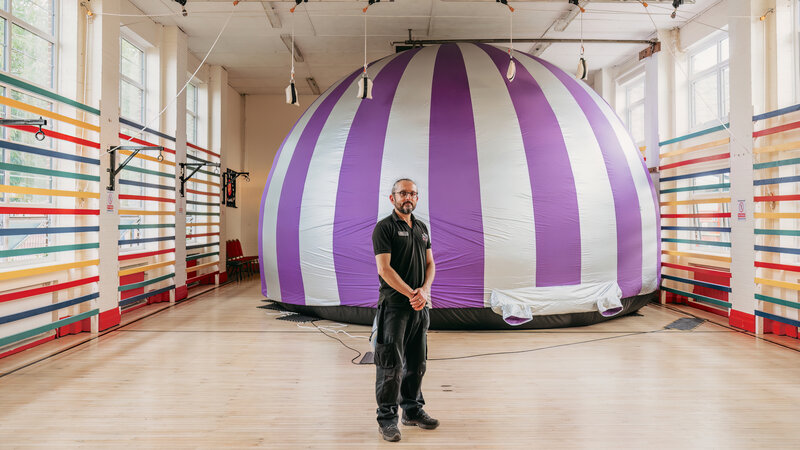
There are few experiences that can make you feel like a curious child again quite like stepping inside a planetarium. One moment you're gazing up at a star-filled sky, the next you're taking the controls of a virtual spacecraft.
That's exactly what Mario does through his immersive 360° dome experiences. We caught up with him to hear about his lifelong love of science, the unusual journey that led him to building planetariums around the world, and why that child-like curiosity is something we should never let go of.
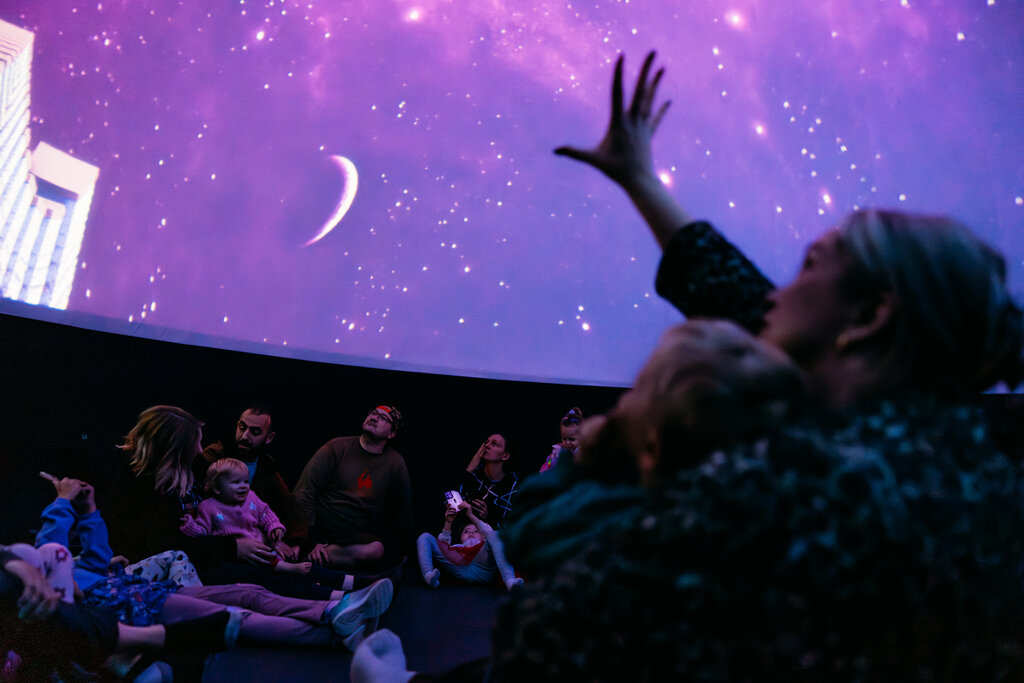
Tell us a bit about yourself – what's your story, and what do you do when you're not hosting experiences in your dome?
"I've always been a science geek"
Growing up in South Africa, Mario was lucky enough to spend time in game reserves beneath some of the world's clearest night skies. That early fascination with nature and the universe never left him.
Today, science isn't just his career – it's still his biggest passion.
"It's a wonderful thing when your hobby is also your career, because you never require a break from it; instead of exhausting you, it invigorates you."
When he's not delivering immersive dome experiences, you'll usually find him searching for new visuals to bring into his shows or diving into another topic that's captured his imagination. Right now, that's the world of Artificial Intelligence.
"I'm learning everything I can about what I think will be one of the biggest societal changes we've ever experienced."
From Carl Sagan to creating planetariums
Mario's journey into science communication began as a teenager after watching Carl Sagan's legendary television series Cosmos.
"I was hooked."
He knew immediately that he wanted to inspire people in the same way.
After university, an unexpected twist led Mario to spend six years undertaking community service in South Africa due to his anti-apartheid activism. What followed proved to be a defining chapter, beginning at Durban Botanic Gardens before moving to the Durban Natural Science Museum, where his passion for science communication truly flourished.
It was there that Mario founded the KwaZuzulwazi Science Centre and even created a simulated planetarium - despite never having visited a real one himself.
Since moving to the UK in 2000, he's helped launch and establish planetariums in both Glasgow and Birmingham before bringing his passion for immersive science experiences to Bristol.
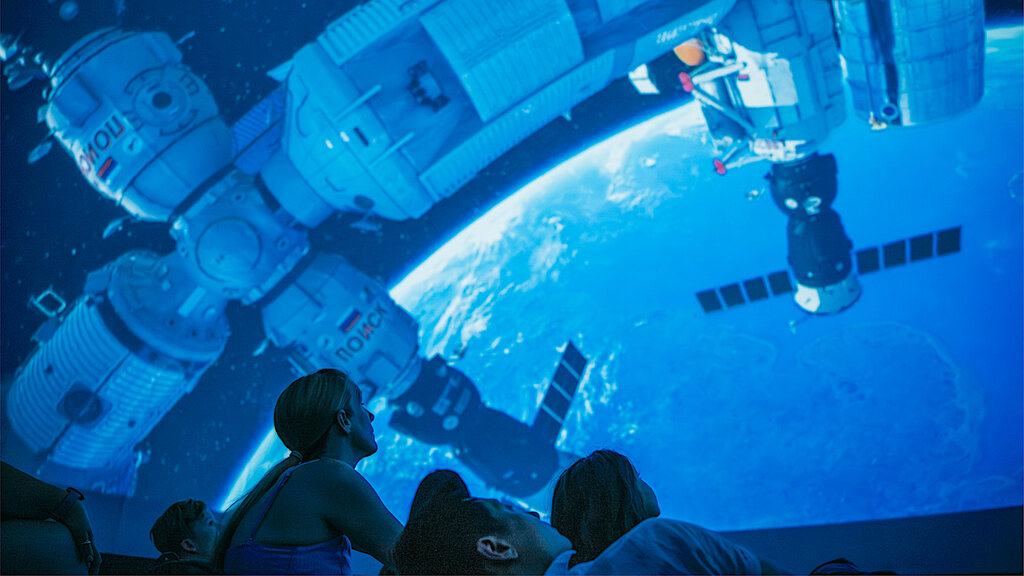
Inspiring people to see the world like children again
Ask Mario what he loves most about his work and the answer comes quickly: curiosity.
"We're all born curious," he says. "You only have to watch children to see it." As adults, though, life's distractions often bury that natural sense of wonder. Inside the dome, he sees it return.
Rather than following a rigid script, Mario encourages audiences to steer the experience by asking the questions they've always wondered about. Whether it's black holes, evolution, Mars missions or the future of humanity, each show becomes a conversation.
"What I love most is encouraging people to view the world like children again."
The result is that no two shows are ever quite the same.
The moments that stay with him
With every audience bringing different questions, Mario has collected countless memorable moments over the years. One review in particular perfectly captured what he hopes people take away from his experiences:
"From first looking up, we were hooked. From the universe, space travel and the future, the show had it all. Mario welcomed interactivity from all and replied in a straightforward way, producing illustrations to demonstrate the point in an instant. Two weeks later we are still talking about it."
But not every memorable moment comes from wonder.
During a recent school session about evolution, Mario displayed an image of a modern-day lizard gradually evolving into a snake and asked the class a simple question:
"Is this a snake or a lizard?"
One Year 5 pupil immediately replied:
"It's AI."
For Mario, it was a powerful reminder of just how quickly technology is changing the way young people understand and question the world around them.
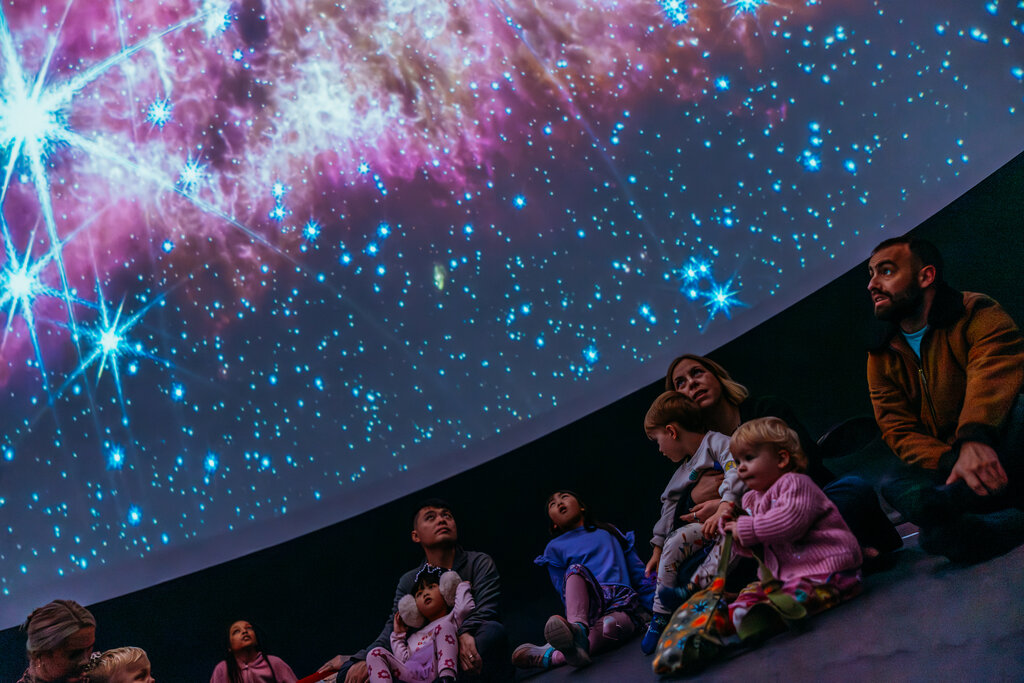
More than a planetarium
People often arrive expecting a traditional planetarium show about constellations and stars.
They quickly discover it's something much bigger.
The digital dome becomes an aquarium, a virtual reality experience without the need for headsets, a rollercoaster, or even the cockpit of an aircraft where visitors can control the view themselves using a gamepad.
Even during astronomy sessions, Mario likes to surprise people.
"Five minutes of the night sky is enough," he says.
Instead, his shows weave together stories about our past, modern space exploration and the future, touching on everything from Mars missions to AI-powered humanoid robots that could soon transform everyday life here on Earth.
Looking to the future
Mario's passion for helping people understand science isn't slowing down.
He's currently developing a brand-new interactive workshop called Trained to Deceive: AI, Deepfakes and Who the Algorithm Thinks You Are, designed for schools.
With new guidance encouraging schools to teach pupils about deepfakes, misinformation, algorithms and AI-generated content, the workshop gives students the chance to train a simple AI model themselves before deliberately tricking it into making mistakes.
By pulling back the curtain on how AI actually works, Mario hopes to equip young people with the critical thinking skills they'll need to navigate an increasingly complex digital world.
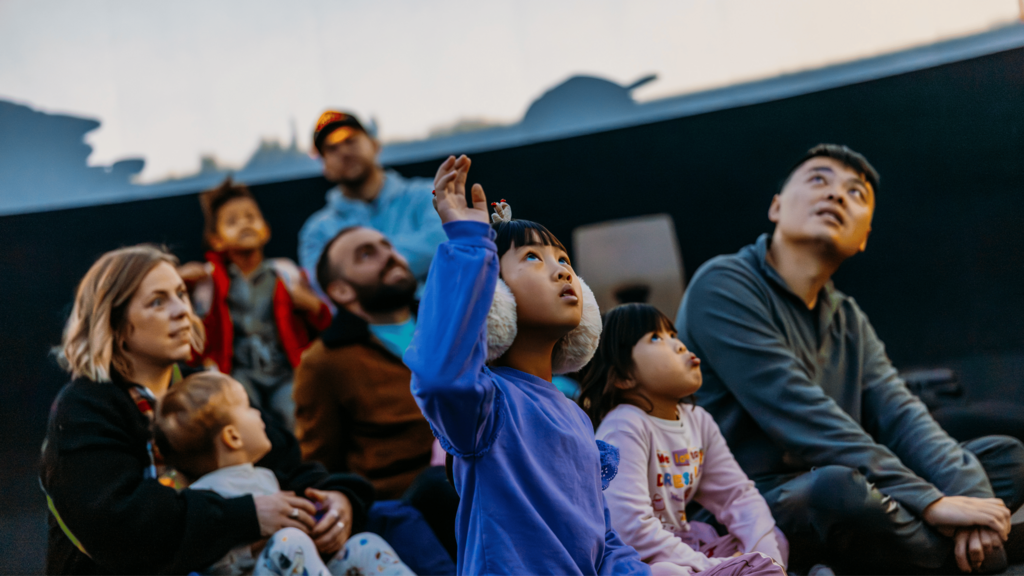
Experience the wonder for yourself
Whether you're fascinated by space, curious about flight, or simply looking for something completely different to do with the family this summer, you can experience Mario's incredible interactive shows at Aerospace Bristol from 1–16 August.
Choose from three unique dome experiences: Family Planetarium Show with Astronomy Q&A, where no question is off limits; Cockpit Command: 360° Family Flight Experience, putting you in the pilot's seat with immersive wraparound visuals; or AstroTots: Stars, Shapes & Colours, specially designed for younger children.